

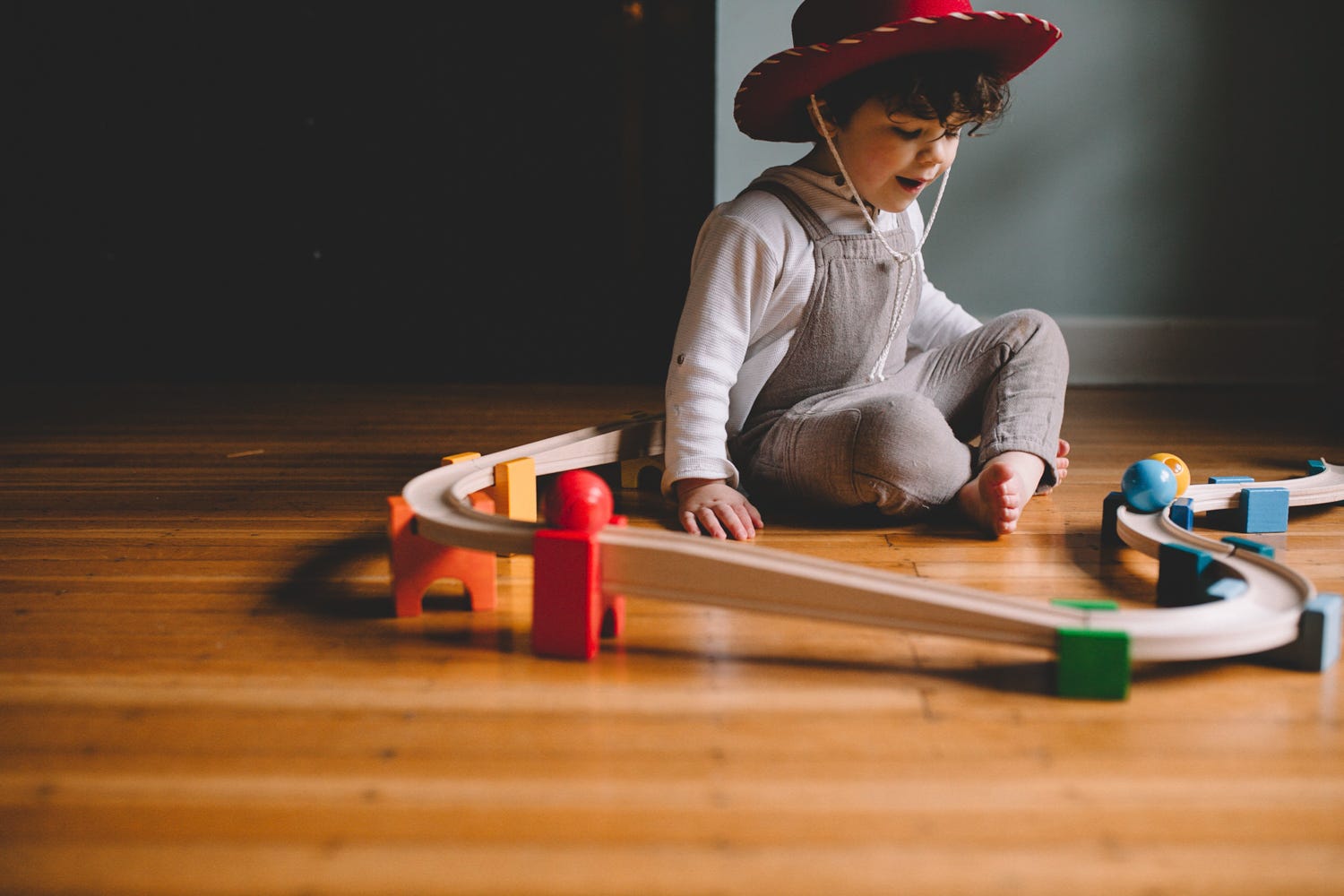
I don’t know about you, but I often feel like I’m fighting a losing battle with screens.
They’re shiny, quick, and always available. They give children what they want in an instant. Meanwhile, play – the very thing that helps them grow into curious, creative, independent people – sometimes struggles to compete.
The good news? We don’t have to rely on sheer willpower, either theirs or ours. We can borrow some tools from a surprising place: behavioural economics.
It’s the science of how people really make decisions. Not the tidy, rational version, but the messy, human one. And when we design the environment with that in mind, play suddenly becomes the easy, obvious choice.
Here are eight ideas, each with a simple experiment you can try at home.
1. Commitment devices
We behave better when we’ve already promised in advance - but how that looks depends on age.
For over fives. Make a public pledge. Mark “Screen-Free Saturday” or “Play First After School” on the family calendar. Once it’s there in black and white, it becomes the default expectation. Children this age can hold tomorrow in mind, so the promise carries weight.
For under fives. Think rituals, not promises. They live in the moment, so the commitment has to be built into the routine. Try a special play basket that only comes out at a set time. “After breakfast, we open the basket of blocks” (or the toy farm, or the doll’s house - whatever she loves). The ritual itself is the commitment, and the environment holds it in place.
Try this: Mark your pledge on the calendar, or set out a basket that only appears at a fixed time each day.
2. Loss aversion
We hate losing more than we like gaining.
That’s why adults keep up a streak of daily runs, Duolingo lessons, or even Wordle wins - we don’t want to “lose” the progress we’ve made. For older children, a “play streak” chart can work in the same way: each screen-free day earns a star, and the thought of breaking the chain is motivating.
With younger children, though, this is much harder to pull off. They don’t yet have the executive function skills to think ahead and feel the sting of losing something abstract, like a future reward or a broken streak. To them, it can easily feel like punishment. In these cases, it’s usually better to rely on other nudges - quick-start activities, choice limitation, or social proof - that make play feel immediately rewarding rather than dependent on distant goals.
Try this: Use streaks with older children, but for younger ones choose nudges that deliver instant rewards, like a quick-start basket.
3. Present bias
We grab what’s most rewarding right now. Screens are designed for this.
Try this: Create a “quick-start basket” of activities that need no prep – pens and paper, a puzzle, a ball. Place it exactly where your child usually reaches for a device. When play feels just as immediate, the choice shifts.
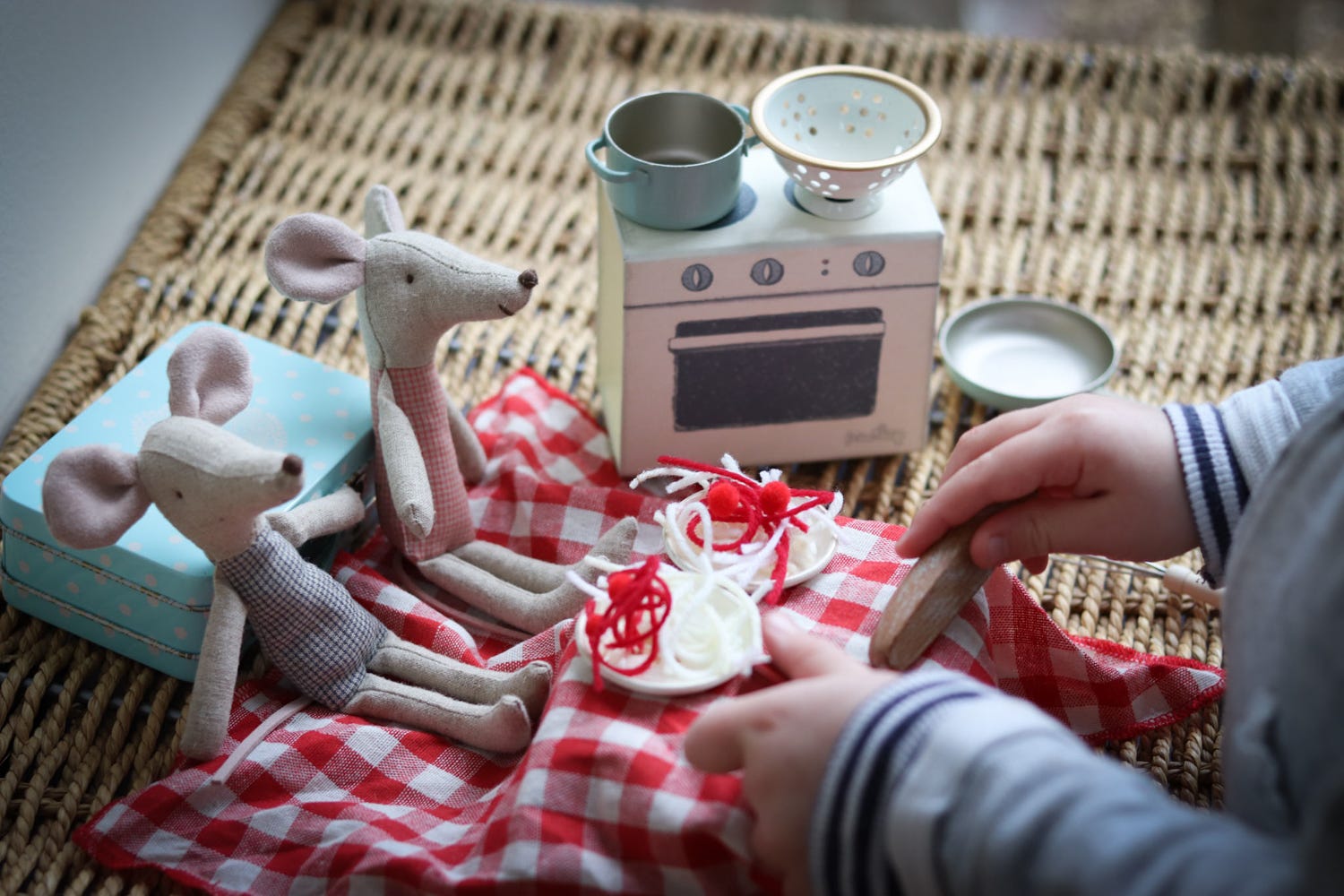
Note: This is where invitations to play shine. Set up an enticing scene - however small - and watch your child become captivated by the story. A couple of strands of red and white wool might be all it takes. Where invitations go wrong is when you spend too long setting them up. Instead, see them as a quick, throwaway experiment. Does my child engage with this? If not, ditch it and move on to something else. You are teaching your child to see the fun and possibility in everything so failures still count as wins.
4. Social proof
We copy what others do. Children especially.
My daughter has never been very confident with maths. She needs more practice with her number bonds, but worksheets make her anxious. So one afternoon I sit at the table with a pile of receipts, pretending to do my “accounts.”
The numbers are small and, by some miracle, they all seem to add up neatly to ten or twenty. £5 + £5 for stationery. £6 + £4 + £7 + £3 for subscriptions. When I get stuck, I start counting on my fingers.
(Never underestimate how credulous a five-year-old can be!)
What are you doing, Daddy?
I’m doing my accounts. Look, these are all the things I’ve bought this month, and I have to check the totals.
Can I help?
Of course! This one’s tricky. I’ve got £6, £4, £7 and £3. I need to know how much that makes altogether but I don’t have enough fingers.
I know, Daddy! You can use those blocks.
How did they get there? And what do I do with them? I’ve never tried using counting blocks before.
Don’t worry, Daddy, I can show you!
And just like that, the fear disappears. Maths isn’t a worksheet or a test - it’s something you see your dad doing at the kitchen table.
In the words of Han Solo:
Sometimes I amaze even myself…
But really, this is social proof at its simplest. Children believe what they see. When you treat number bonds, drawing, or play as part of everyday life, they want in. And the more they join you, the more confident they become.
Try this: Next time you want your child to practise something - whether it’s drawing, building, or even maths - start doing it yourself in plain sight. Keep it simple, keep it playful, and wait for her to ask: “Can I help?”
