

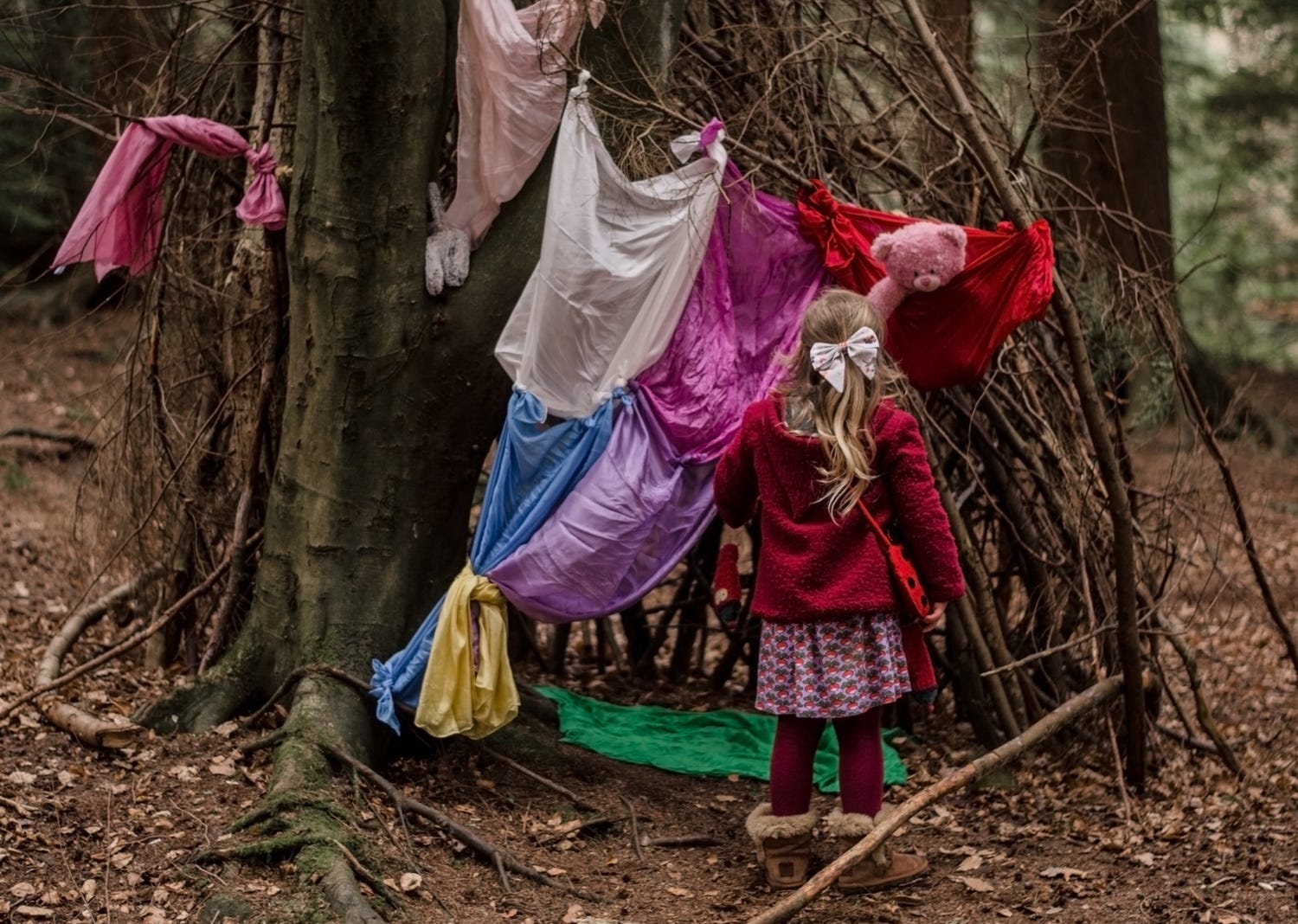
Imagine this:
Your child has a whole afternoon ahead of her.
No planned activities. No screens. No one telling her what to do.
What happens next?
Does she leap into a project, get lost in play, and completely forget the time?
Or does she trail after you, saying, “I’m bored,” waiting for someone else to entertain her?
The difference isn’t personality - it’s practice.
Children who know how to make their own fun have built the habit of self-starting. They trust themselves to turn boredom into something interesting.
And that’s a skill that can be taught.
What is a creative self-starter?
A creative self-starter is a child who:
Doesn’t wait to be entertained.
Has a store of ideas and activities she can turn to.
Follows her curiosity without needing permission.
Gets absorbed in projects - sometimes for hours.
These are children who don’t rely on screens, schedules, or constant parental input.
Why self-directed play matters
A child who learns to make her own fun is building independence, problem-solving skills, perseverance, and creativity. She discovers how to begin something without waiting for an adult, finds ways to work with the materials she has, and learns to keep going even when things are difficult. Over time she becomes used to experimenting, inventing, and taking risks. In this way, play becomes practice for life. Children who trust their own creativity grow into resilient, adaptable, and self-motivated adults.
Why some children struggle to self-start
If your child often relies on you to suggest activities, it is not because she isn’t capable. It may be because:
She has never had to practise. If adults always step in, she lacks experience.
Screens have replaced boredom. Boredom is where creativity begins, but screens remove the need to push through that uncomfortable moment.
Her play environment is not set up for independence. If she can’t reach what she needs, she will wait for help.
She doubts her own ability. Self-starting is a mindset that only grows with practice.
Five ways to raise a child who makes her own fun
1. Let her experience boredom - without rescuing her
Boredom is not a problem to be solved. It’s the starting point of creativity.
The next time your child complains, "I’m bored," resist the urge to suggest something. Instead, say, "I wonder what you’ll come up with?"
She may struggle at first - but this is where self-starting begins.
I won’t pretend this is easy. If you walk past my house on a summer’s day, when the windows are open and all the children are stuck at home while I write these newsletters, you’ll hear a lot of whining.
Dad, I’m bored!
Dad, can we have screens?
Most of the time, I don’t answer. But, occasionally, if they pester me enough, you’ll hear my voice rise above the cacophony:
Go away and find something to do.
That’s about as much help as I’m prepared to give them these days. They have no excuse. They’ve had the benefit of me exposing them to all kinds of creative endeavours, from woodwork to sewing, baking and print-making.
Now it’s up to them.
NOTE: I probably have a higher tolerance for aggravation than most parents. My wife doesn’t like it when tensions rise. But I know that if I let the children complain and bicker for a few minutes, they’ll eventually back down and start to play.
Why do you always ask me? she asks them, exhausted by their demands. Why not Daddy?
Because Daddy says ‘no’.
I watch them go through the five stages of grief: Denial, Anger, Bargaining, Depression, and Acceptance. It’s the same every time.
Try it yourself. Try it today.
Hold your nerve. Your child will accept her fate (though it might take 20 minutes of tears, first time round).
And then life gets easier.
2. Give her a rich mental library of stories and games
A child who knows playground games, rhymes, and traditional stories has a deep well of ideas to draw from.
Playground games. What’s the time, Mr Wolf? Duck, Duck, Goose.
Songs and rhymes. Skipping chants, clapping games, tongue twisters.
Stories. Fairy tales, myths, and folktales that fuel imaginative play.
Memory and word games. Riddles, hand-clapping patterns, simple challenges.
By far the most powerful thing you can do for your child is to read to her. Nothing else stands in for it. In my own family, I can see the difference between the children who enjoyed endless bedtime stories and those who, for reasons beyond their control, missed out on that routine. And as a teacher, I saw the same pattern year after year: the children who were read to at home flourished.
3. Give her a place to make a mess
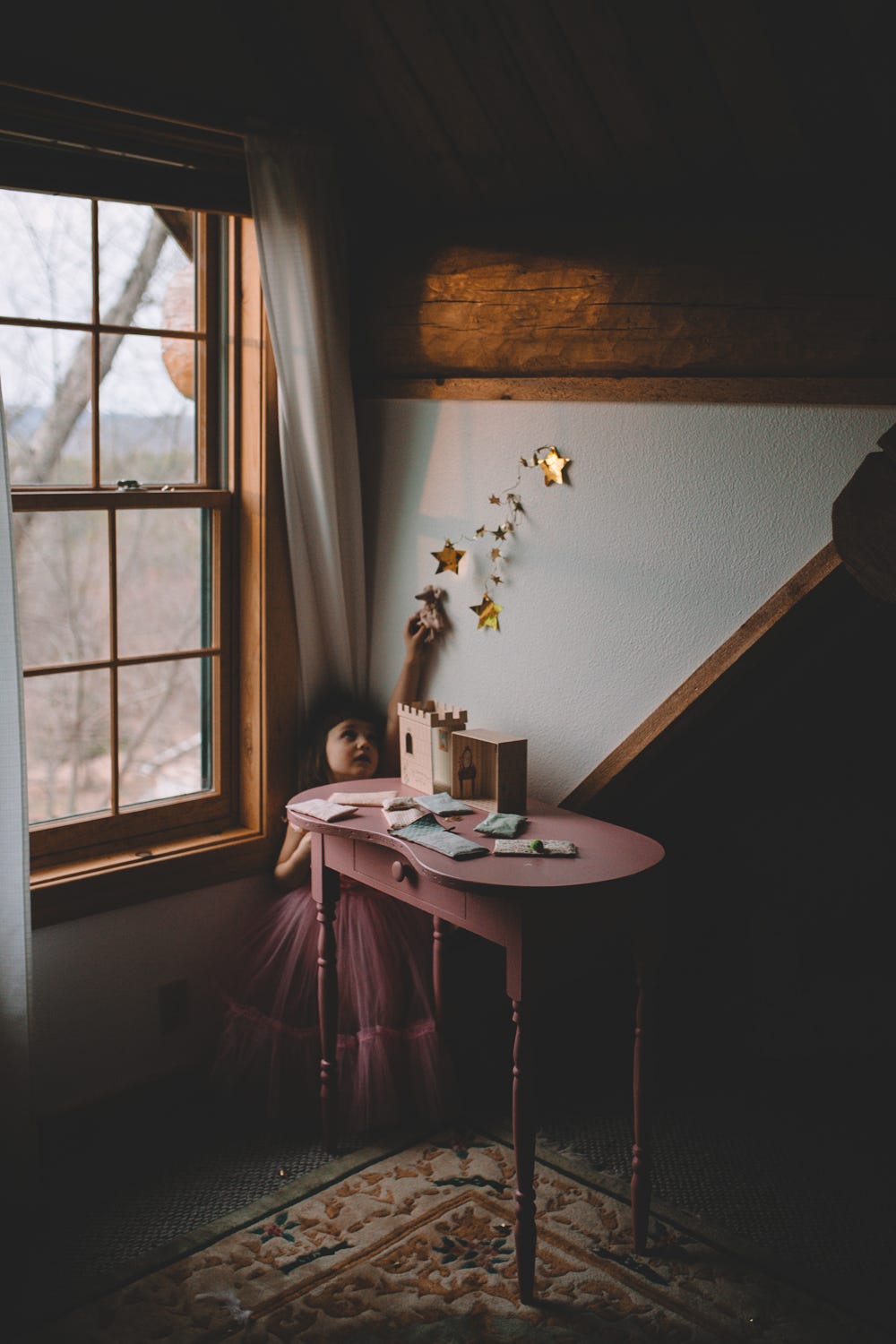
Have a corner of your home where spills are tolerated.
We once lived in a rented flat with three children under three where the carpets were immaculate (and the landlord was fastidious) so I do understand that this is easier said than done.
During those years, I relied heavily on a builder’s tray that we kept in the kitchen for all our messy and sensory play and a big roll of old wallpaper that I used to cover up the kitchen table. And we had a lot of water play in the bathroom and at the sink.
It wasn’t how I’d pictured my children’s early years before I got married. There was no idyllic garden full of natural wonder. But they did, at least, have the freedom to make and to break.
Best of all, they had a space to be themselves, to follow their instincts, to create.
And they learnt to play alone - and that it was OK.
4. Make supplies accessible
Do you ration the paints? The glue? The tissue paper?
Some materials are special - and expensive - and we’ve all seen preschoolers on the rampage, free-pouring PVA onto the table or cutting through five sheets of paper at once.
You had such high hopes for those materials!
But if your child has to ask every time she wants paper or glue, it’s hard for her to get into a creative flow. Worse, how can she become a self-starter if she always needs you to start.
Instead:
Store craft materials where she can reach them.
Organise toys so she can see what is available.
Create readymade play kits - boxes of materials that go together naturally:
needles, thread, buttons and felt;
batteries, wires and motors;
junk materials, masking tape and markers.
In short, get a craft trolley. Buy one from IKEA. They’re ugly, but cheap. You won’t mind it being destroyed.
And don’t worry about buying the fanciest craft materials. Your child will be delighted with old magazines to cut out and free access to PVA and the recycling box.
No need to overcomplicate things:
Pencils, paper, scissors, glue. There’s a lifetime of learning right there.
5. Step back - even when you want to step in
Your child needs space to work things out. The moment you intervene, you interrupt her thinking process.
Instead of offering a solution, wait.
If she’s really stuck, ask a question.
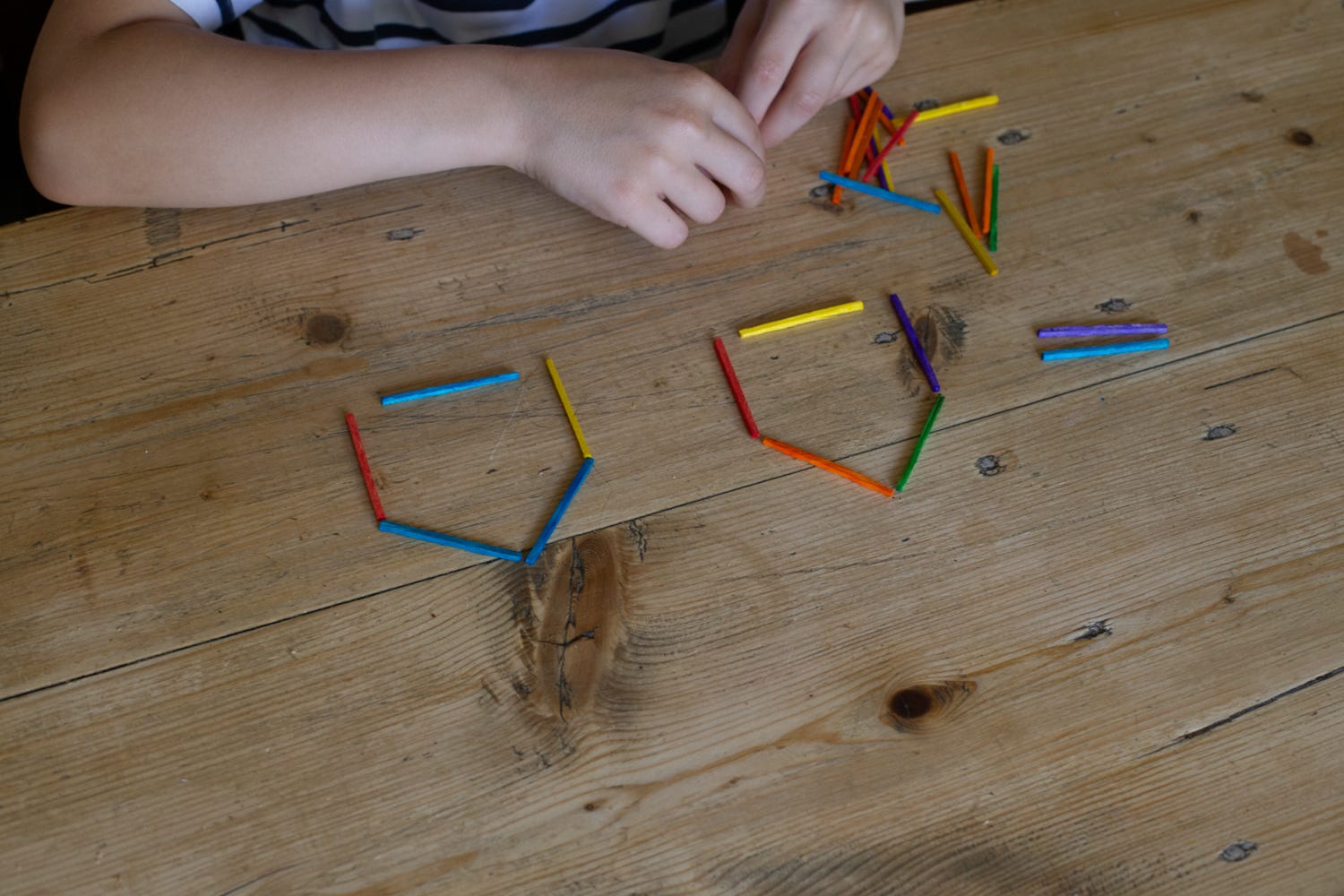
Daddy, there’s a gap at the bottom of my house. The stick isn’t long enough.
Hmm. We don’t have any longer sticks. What else could you do? What happens if you close the gap at the bottom?
That works, but now the roof is too wide. Wait! I can make the roof fit by making it more pointy!
Hooray!
This gives her ownership of the solution - and confidence to start again next time.
What self-starting looks like in real life
One day I asked my 11-year-old:
"If you had to spend every afternoon in your room, without screens or books, what hobby would you start?"
Blank stare.
But my younger children had answers immediately:
“Carry on building my wargaming board.”
“Write a comic.”
My eldest needed a nudge. We talked about a recent trip to the Small is Beautiful exhibition in London, where he had seen miniature buildings. For a week afterwards, he was absorbed in making tiny paper houses.
It didn’t last forever. But for those seven days, he was completely lost in play - without screens, without me, without needing to be told what to do.
That is the goal.
The moment you know your child is a creative self-starter
You glance at the clock. It is seven o’clock and dinner is late. But it doesn’t matter - your child hasn’t noticed.
She is so deep in play, so absorbed in her project, that she has forgotten to ask for a screen.
You make a simple supper, pour a hot chocolate, and smile.
She is happy. You are happy.
And best of all, she got there on her own.
Start today. Choose one small way to encourage self-starting - set up a space, step back, or let boredom happen.
And watch what unfolds.