

Wait! Before you hit the back button, I've got something new for you.
Yes, we're talking about open-ended play and, yes, you've heard it a million times before - but not like this.
This isn't another article telling you to just leave your child to explore independently using wooden blocks and everyday materials you can find around the home. It's time for some original research and invigorating ideas.
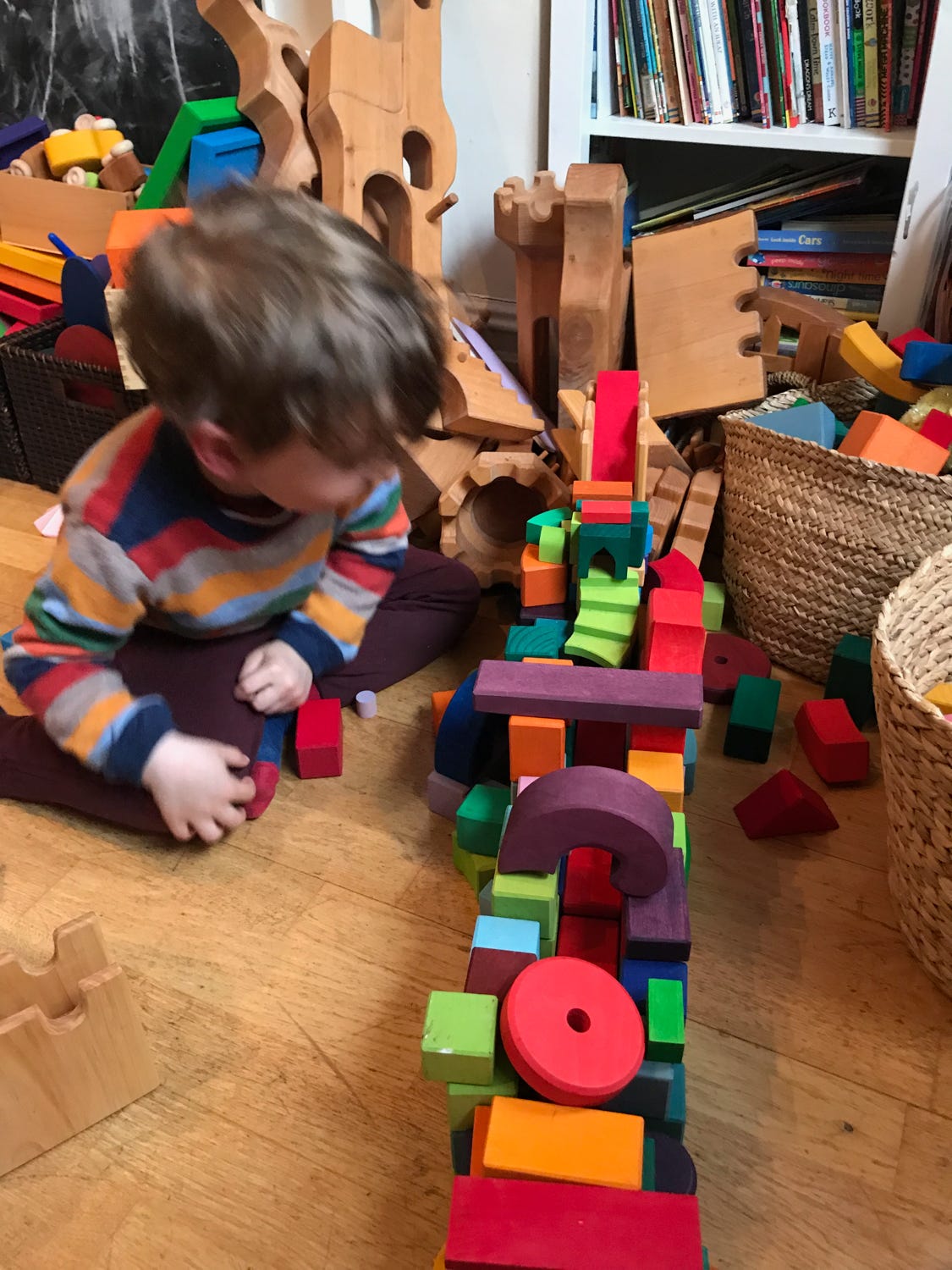
A quiet moment
Here is my second son.
He's not quite five.
And he is absorbed. Maybe even obsessed.
Back from school, the long afternoon stretches out before him. He's full of energy - the kind of boy who never stops. As a toddler he was covered in bruises from barrelling along, crashing into things, making and breaking.
But not today.
Because this is his métier. He loves to build. More importantly, he loves to imagine.
Look carefully and you’ll see that his ramshackle construction is nothing of the sort. The higgledy-piggledy blocks have a purpose.
Psst! I have an idea!
Something is whispering to him.
It’s a voice in his head. From a brain network scientists have only recently discovered.
The brain's hidden choreography
Open-ended play is any activity where your child decides what to do and how to do it. These games have no fixed ending and no ‘right’ answer.
Think blocks, dolls, vehicles - or even sticks and stones. The play can take any direction your child chooses.
So far, so familiar, right?
But there’s more going on beneath the surface.
Neuroscience has now revealed the underlying mechanism that powers this quintessential type of play: the brain networks.
The Default Mode Network (DMN). Go outside and look up at the sky. Let the clouds drift in and out of view. It won’t be long before you’re daydreaming. Your mind isn’t engaged in a specific task so it ‘defaults’ to the Default Mode Network, the part of your brain responsible for imagination. Only discovered in 2001, this network sits in the background, waiting to light up when task-focused regions switch off. The DMN is at work when your child pauses, mid-build, to think about what direction her construction will take next.
The Task Positive Network (TPN), as its name suggests, is responsible for getting things done. The DMN has the idea; the TPN follows the instructions and finishes the job.
The Executive Control Network (ECN) is the brain’s management system during play. It helps your child hold onto her goals (like the vision of a finished tower), adapt her approach when things don’t go to plan, resist distractions or frustration, and monitor progress as she builds. The ECN enables her to switch strategies flexibly: if the blocks topple, she finds a new way to stack them; if something doesn’t fit, she tries another approach. These self-regulation and problem-solving skills are still developing in childhood, which is why sustaining focus and managing challenges can be difficult for younger children.
The Salience Network is your child’s interest detector. Constantly scanning, it decides what’s exciting enough to pursue and when to switch between imagining and doing.
Children move naturally through this loop: dream (DMN) → notice (Salience) → act (TPN), with the ECN keeping them on track. Each cycle strengthens their ability to switch between imagination and focused action - a foundation for problem-solving and self-regulation.
It’s easy to see how learning to co-ordinate these networks is vital for success both at school and in later life.
Fortunately, the best way to train them is through open-ended play.
And open-ended play is fun.
The surprising scaffold
Here's where it gets really interesting. Recent research reveals that in children's developing brains, the imagination network (DMN) is matures more quickly than the executive network (ECN).
You might think that pausing in the middle of play to come up with more ideas would be distracting but that’s not what happens. Instead, the Default Mode Network holds the immature Executive Network’s hand while it learns to focus.
By giving your child the time and space to encounter boredom - and imagine ways to conquer it - you are training her executive functions. She stays on task, follows the plan and a virtuous cycle begins. Each time she plays, her self-regulation improves.
More play, less frustration = a happier, calmer child.
From everyday play to innovation
So what was my son building that day after school? And why was he so inspired?
It all started with a ball track. Fun, but not particularly creative: open the box, connect the pieces, roll the ball. A classic Task Positive Network activity.
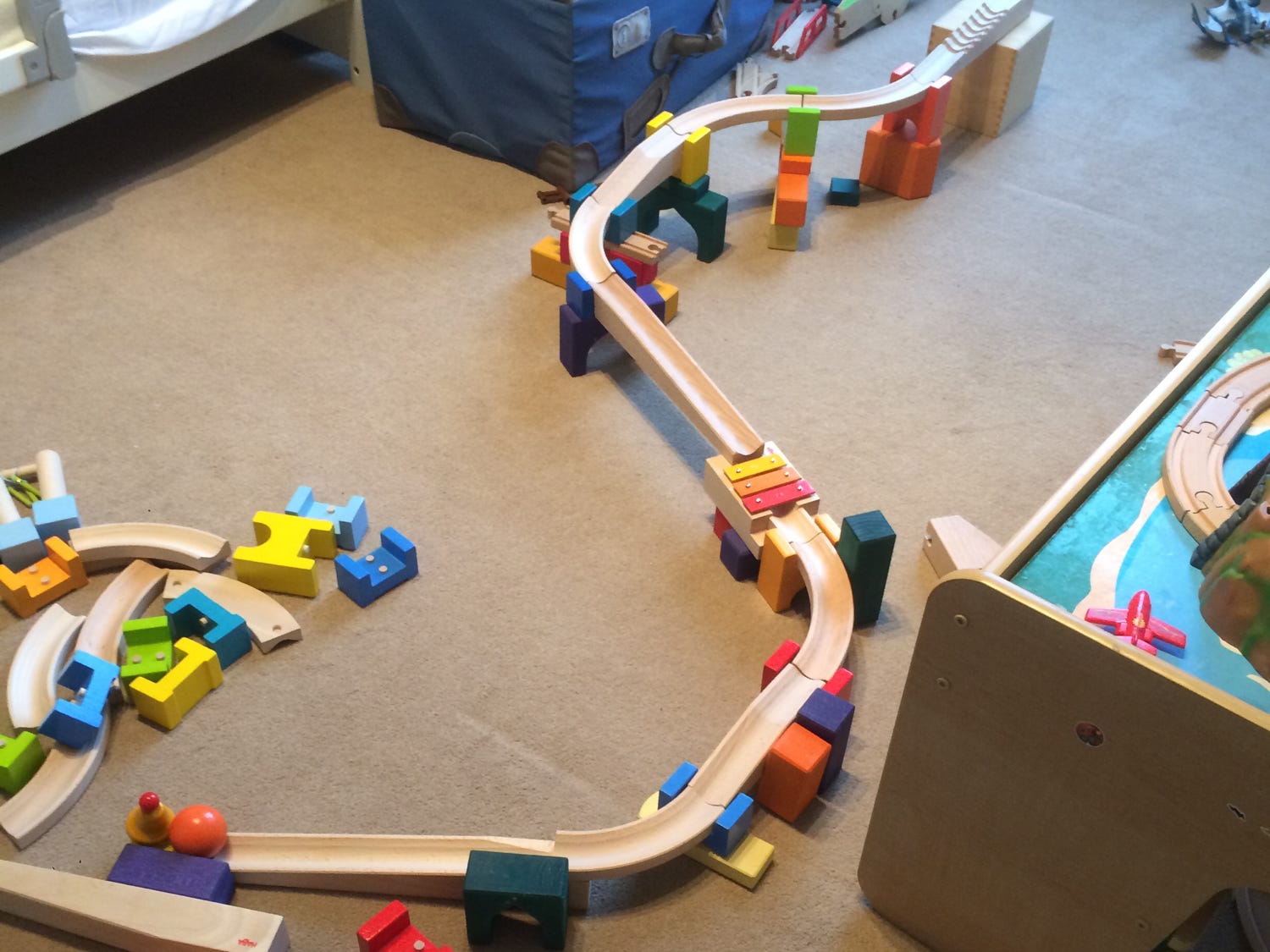
But next time the ball track came out, his Default Mode Network had plans of its own. All kinds of wooden blocks were recruited to add height and variety - and no small measure of challenge. This kind of see-how-far-I-can-push-the-laws-of-physics construction play is called ‘stunt building’. When basic block play gets old, pushing the boundaries is how you keep it fun.
A tip for buying blocks: For maximum play potential, get a variety of shapes and sizes. Longer blocks and boards are particularly useful because they enable your child to span gaps and create openings, greatly increasing the number of forms. Better yet, augment your set and get the DMN firing by introducing everyday objects with useful properties. For example books, tape and cardboard tubes extend what’s possible in fun and interesting ways.
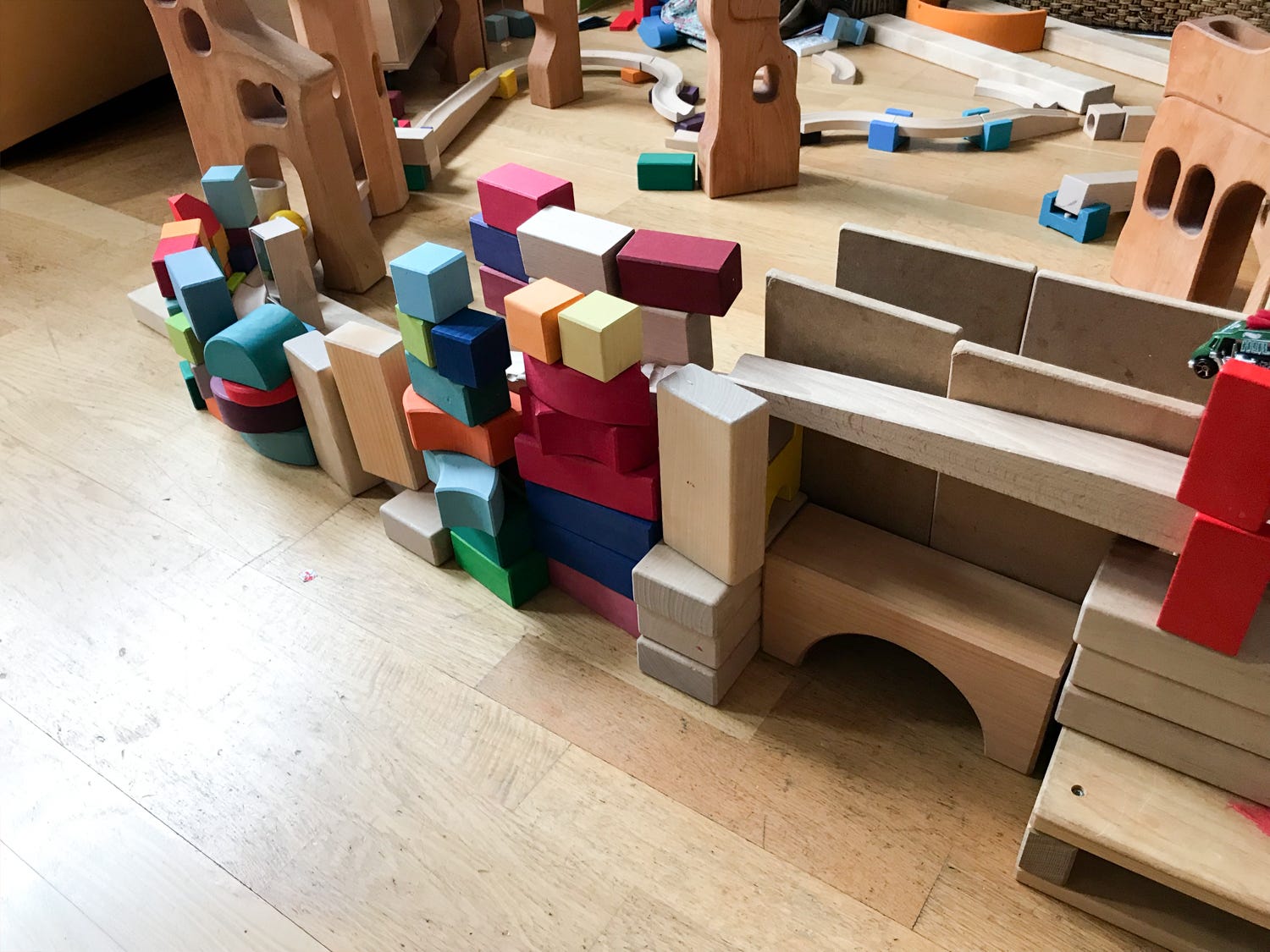
Back to my son, who wasn’t quite finished.
That voice in his head was whispering again.
Could you build a marble run without using any track? Could you? I dare you.
Challenge accepted!
He didn’t say any of this out loud, of course.
His Default Mode Network simply provided a flash of inspiration.
But which blocks to choose?
The Salience Network, his brain’s “interest detector”, snaps to attention. It’s always on the lookout for something new, something relevant.
Look! Look! Steps!, it calls.
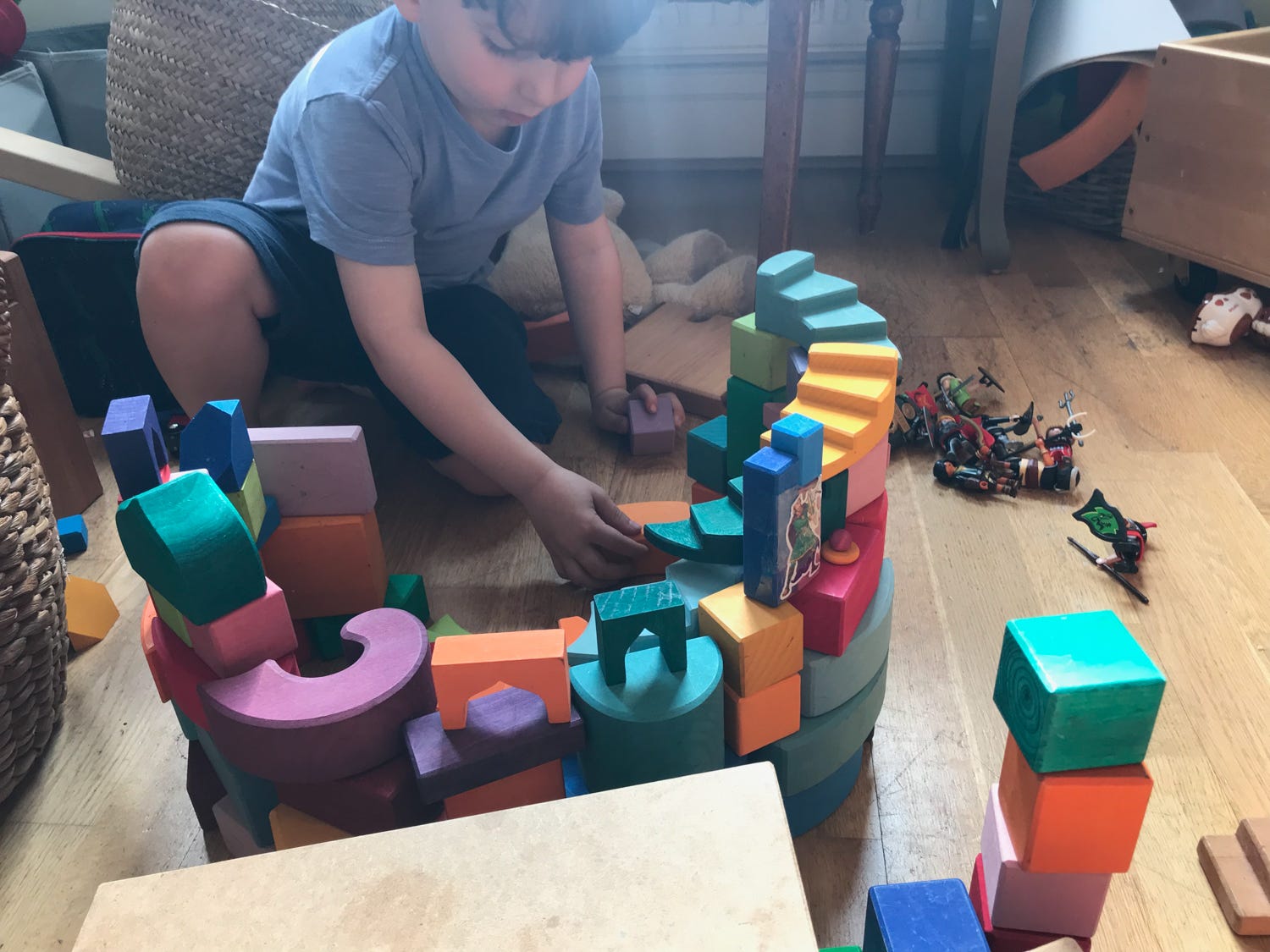
Perfect! What better way roll a marble downhill?
But the marble fell off. There were no guard rails.
Time for his Salience Network to notice something else - the lower part of his construction had a wall on one side and this kept the marble on course. What if he built a new track with walls on both sides?
A marble run where the ball can’t escape, you say? That’s a job for the Default Mode Network!
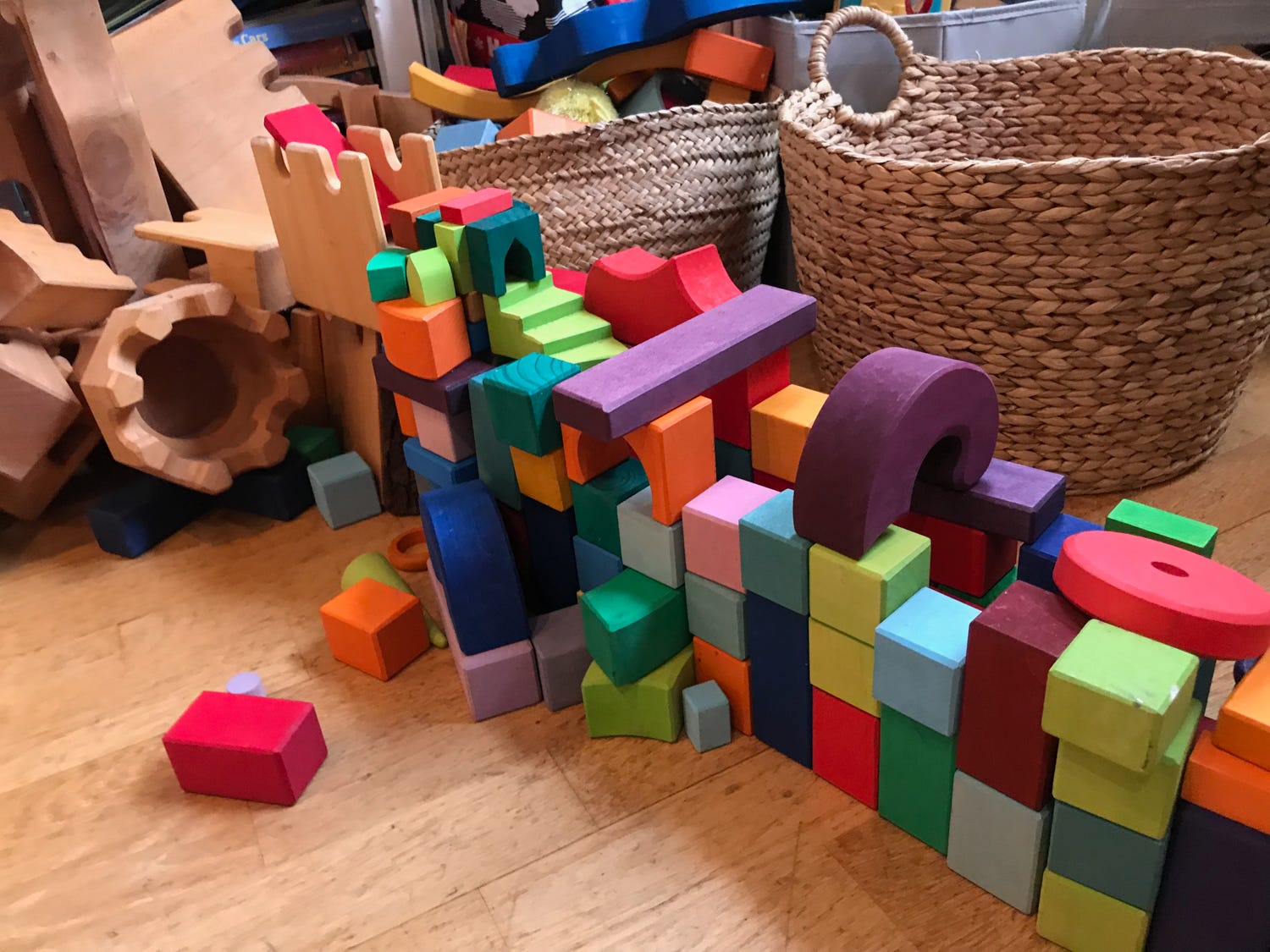
Even better, if you really don’t want the marble to escape, why not put on a roof?
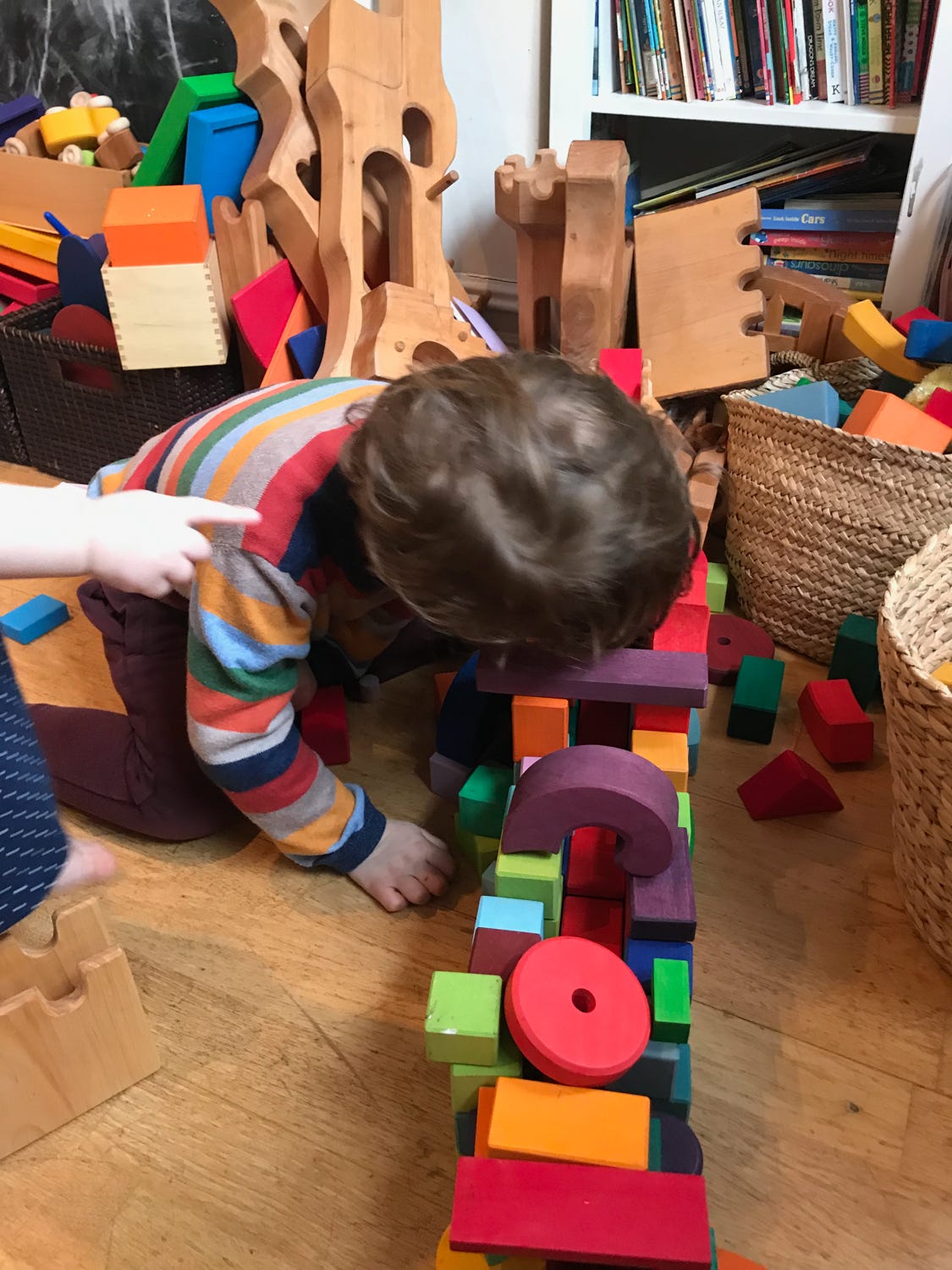
Looking at the partially covered track, another idea presents itself.
The DMN is whispering again.
Even better, make it a secret track. Drop the marble in at the start and watch it magically appear at the other end.
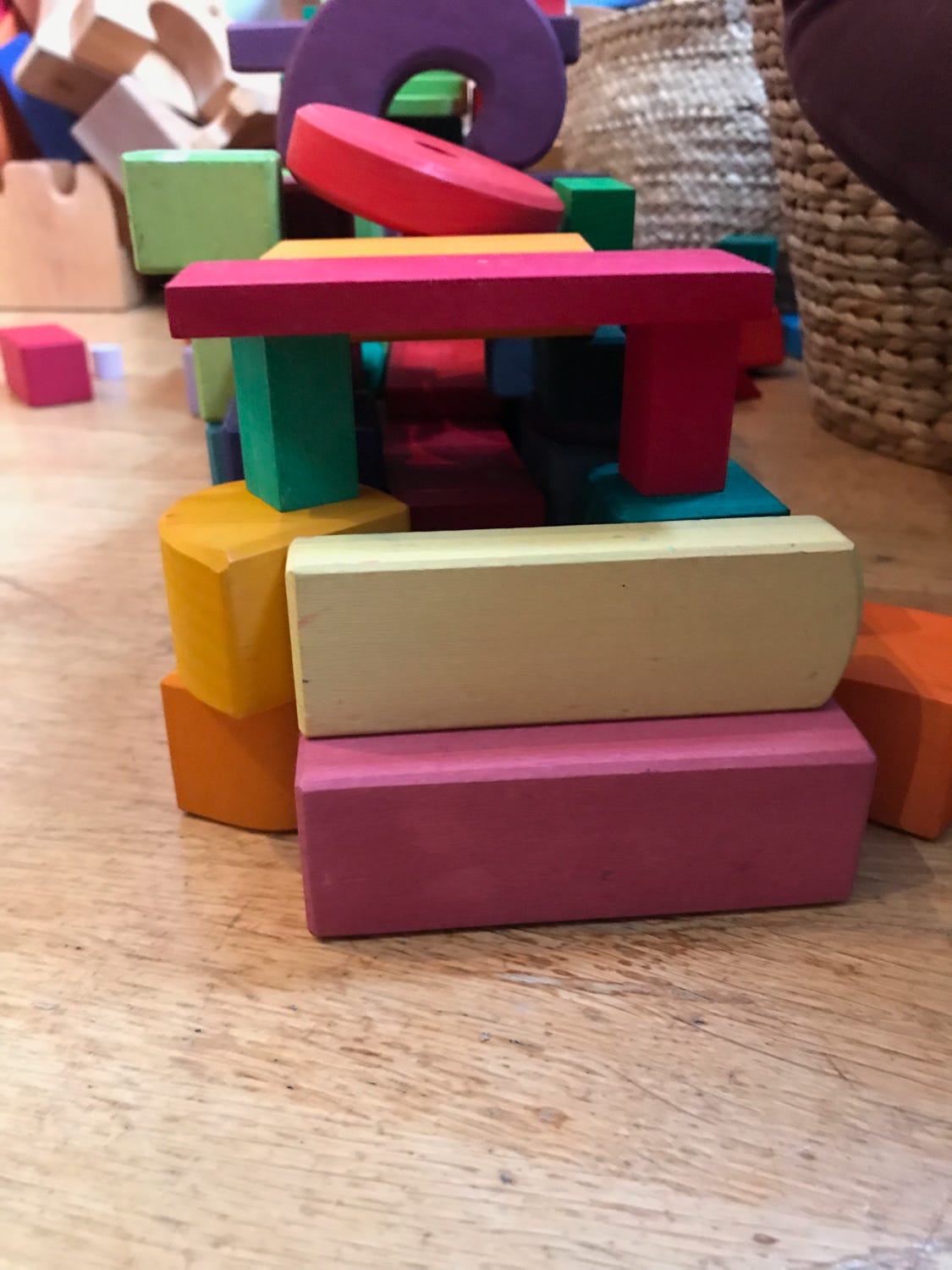
It was a week’s worth of fun.
He came back every day, bursting with ideas on how to improve it.
My role? To leave his construction alone - and to protect it from rampaging toddlers.
His brain networks took care of the rest.
Flow: when play becomes timeless
Call me selfish but I love it when my children spend hours lost in play.
All sense of time goes. It’s what Mihaly Csikszentmihalyi dubbed a flow state.
Flow happens when challenge and skill are perfectly matched. The task is hard - but not so hard it breaks the spell. In those moments, the Task Positive Network takes the lead: focused, absorbed, steady.
Research shows that it’s unstructured free play - not organised sport or adult-led activities - that most reliably creates these states because it’s a challenge your child set for herself.
As parents, we can’t force flow - all we can do is offer the right conditions:
Time. Long stretches without interruption.
Space. A corner to spread out and make a mess.
Trust. Confidence to let the play unfold without asking, “What are you making?”
It doesn’t always work, but we’re establishing the conditions for the right kind of play - and that can only be a good thing.
The long view: building brains for an unknown future
How has AI affected you over the past two years?
If you work in a hospital or a school you may not have noticed much of a change yet but if you’re a marketer or an accountant, your world has probably been turned upside down.
With robots and self-driving cars now on the horizon, the pace of change doesn’t look like it will be slowing down.
What kind of world will your child inhabit - and how can you prepare her for it?
These are difficult questions.
One thing’s for sure, though. You won’t be encouraging her to pursue a career in data entry or driving a taxi. Anything a computer can do is now off-limits.
So what’s left?
Being human.
Your child will succeed because she will excel at what only people can do - make friends, persuade, inspire and lead. Empathy will become a superpower.
Above all, she will triumph because of her imagination. No computer could ever compete because her ideas are rooted in direct experience.
And she will do all of this because when she was young, you made time and space for open-ended play.
Final word
The more time you make for open-ended play, the more creative and persistent your child becomes.
This is why I don’t like screens (though I do, hypocritically, give them to my children when I need peace and quiet to work): like the ‘empty calories’ of a sugary drink when you could have had an apple, not only are they harmful but you’re also missing out on the good stuff.
Like a delicate flower, open-ended play needs the right conditions to grow: long stretches, simple materials, few interruptions, generous boredom.
The rest is your child’s brain doing what it was built for: dream, notice, do.
Read next: Games with rules · Unsupervised play